Free 1998 Penny Value Calculator
Select your mint mark, condition, and any errors — then click Calculate.
Step 1 — Mint MarkWhere was your coin made?
How does your coin look?
If you're not sure about your coin's details yet, a 1998 Penny Coin Value Checker is a free third-party tool that lets you upload photos for an AI-powered estimate — a helpful starting point before using this calculator.
Describe Your 1998 Penny for a Detailed Assessment
Describe what you see in plain language — our keyword engine will analyze your description and flag potential varieties.
Mention these things if you can
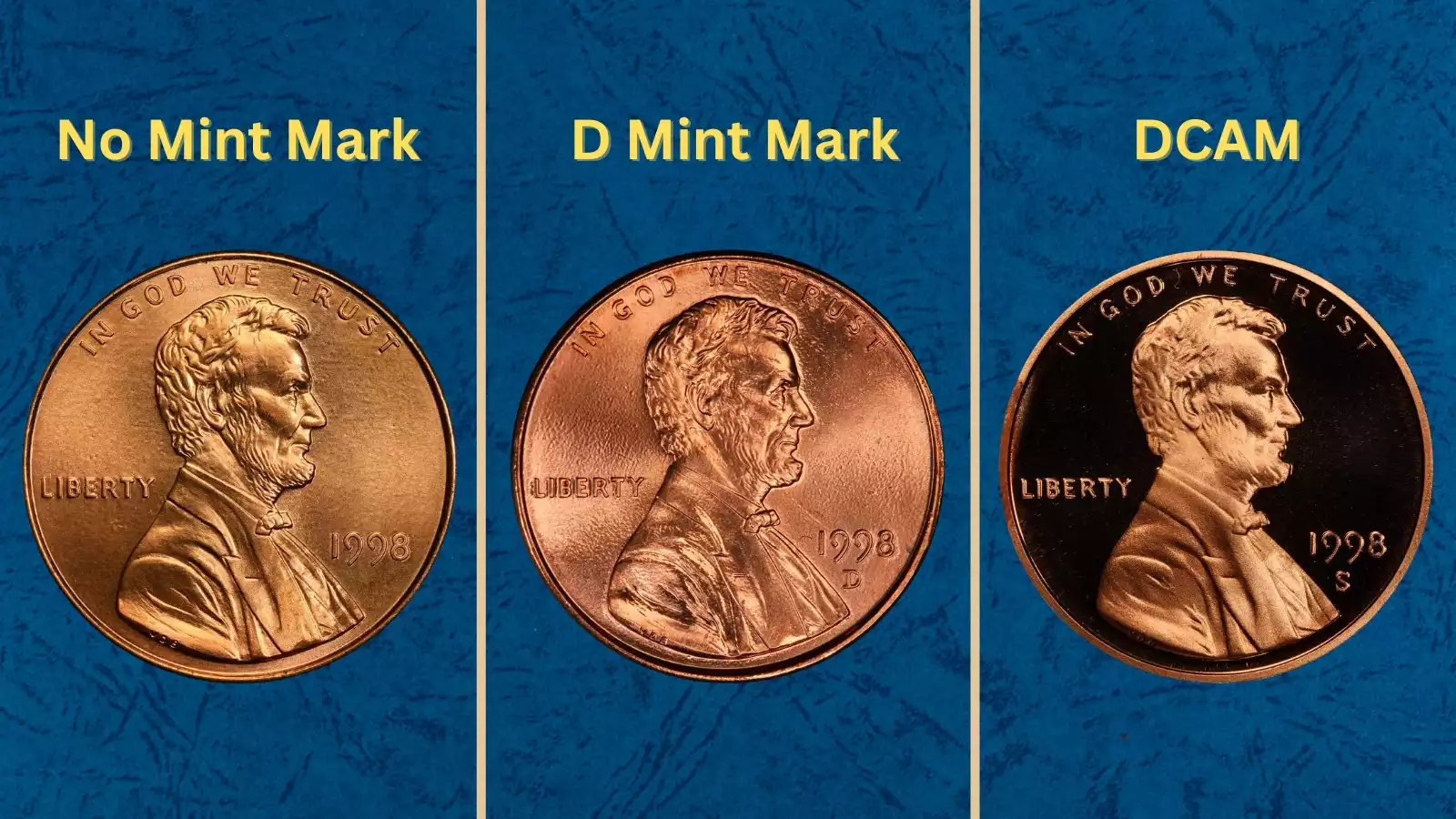
- Mint mark (none, D, or S)
- Overall color: red, brown, or mixed
- AM spacing in AMERICA
- FG initials position near Memorial
- Any doubling on inscriptions
- Signs of wear vs. mint luster
Also helpful
- Weight and size (if you have a scale)
- Silver-colored appearance
- Off-center or clipped edge
- Raised marks or die cracks
- LIBERTY reading as "LIBIERTY"
- Doubled date or lettering
Skipped the calculator? Pick a mint mark, condition, and any errors to get your coin's estimated value in seconds.
Use the Calculator →1998 Wide AM Self-Checker
The Wide AM is the most sought-after 1998 penny variety — worth up to $940+ in top grades. Use this checker to see if your coin qualifies.
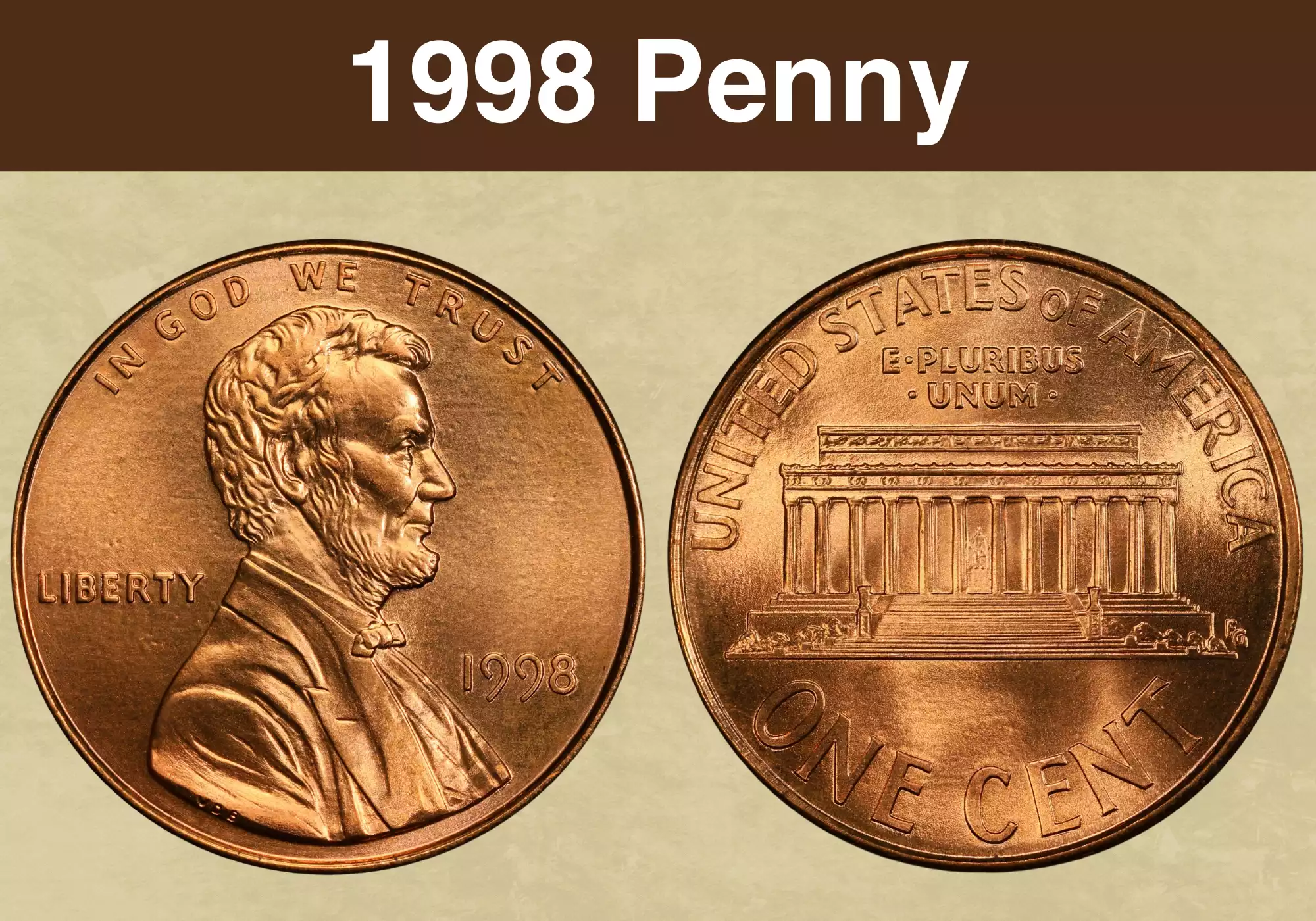
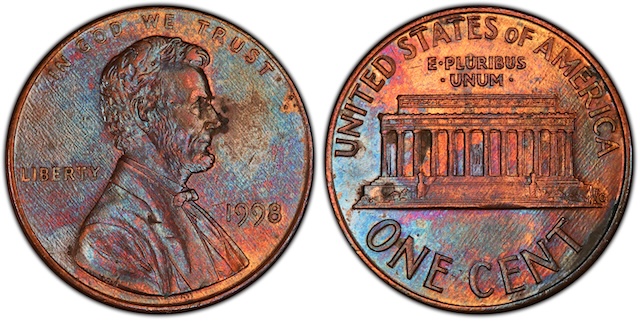
🔵 Common Close AM (RDV-007)
- Feet of "A" and "M" in AMERICA nearly touch
- Small gap or no gap between A and M
- "FG" initials further from the Memorial building
- Found on virtually all 1998-P and 1998-D pennies
- Value: Face value in circulation; $1–$38 uncirculated
🌟 Rare Wide AM (RDV-006)
- Clear visible gap between feet of "A" and "M" in AMERICA
- Space large enough to see daylight with a 5–10× loupe
- "FG" initials sit noticeably closer to the Memorial building
- Philadelphia-only; only a subset of business-strike dies
- Value: $10–$30 circulated; up to $940+ in top grades
Check Your Coin — 4 Diagnostic Points
1998 Penny Value Chart at a Glance
The values below reflect current market pricing based on certified auction results from PCGS and NGC. For an in-depth step-by-step 1998 penny identification walkthrough, including photo comparisons of every variety, visit the linked guide before submitting for grading. Color designation (RD/RB/BN) applies to uncirculated and gem grades and dramatically affects realized prices.
| Variety | Worn (G–F) | Circulated (VF–AU) | Uncirculated (MS63–65) | Gem (MS66–68+ RD) |
|---|---|---|---|---|
| 1998-P (No Mint, Close AM) | $0.01 | $0.01 – $0.25 | $2 – $10 RD | $22 – $190+ RD |
| 1998-D (Denver, Close AM) | $0.01 | $0.01 – $0.25 | $2 – $10 RD | $22 – $250+ RD |
| 1998-S Proof (Wide AM, DCAM) | — | — | $1 – $3 (PR60–65) | $6 – $50 (PR66–70) |
| 1998-P Wide AM (FS-901) | $10 – $15 | $15 – $30 | $20 – $85 RD | $185 – $940+ RD |
| 1998-S Close AM Proof (FS-901) | — | — | $180 – $340 (PR67–69) | $1,000 – $5,160 (PR70 DCAM) |
| 1998 DDO/DDR (Doubled Die) | $0.01 | $5 – $20 | $20 – $50 | $50 – $75+ |
⭐ = Wide AM signature variety · 🔴 = 1998-S Close AM (rarest) · Values based on PCGS/NGC certified auction data · 2026 edition
📱 CoinHix lets you photograph your 1998 penny and get an instant grade estimate on the go — perfect for quickly spotting Red vs. Brown color designations before submitting. — a coin identifier and value app
🗺️ Jump to Any Section
Navigate directly to the tool or guide you need.
The Valuable 1998 Penny Errors — Complete Guide
The 1998 Lincoln Memorial cent produced some of the most dramatic die-mix errors in the modern Lincoln cent series. The six varieties below cover everything from the famous Wide AM (a proof die on a business strike) to struck-on-dime-planchet errors worth over $1,000. Learn to identify each one with these detailed diagnostic cards.
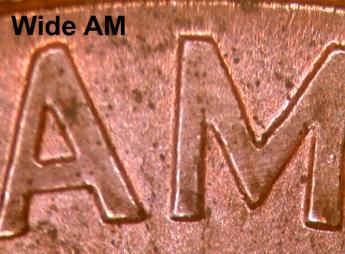
1998-P Wide AM Variety
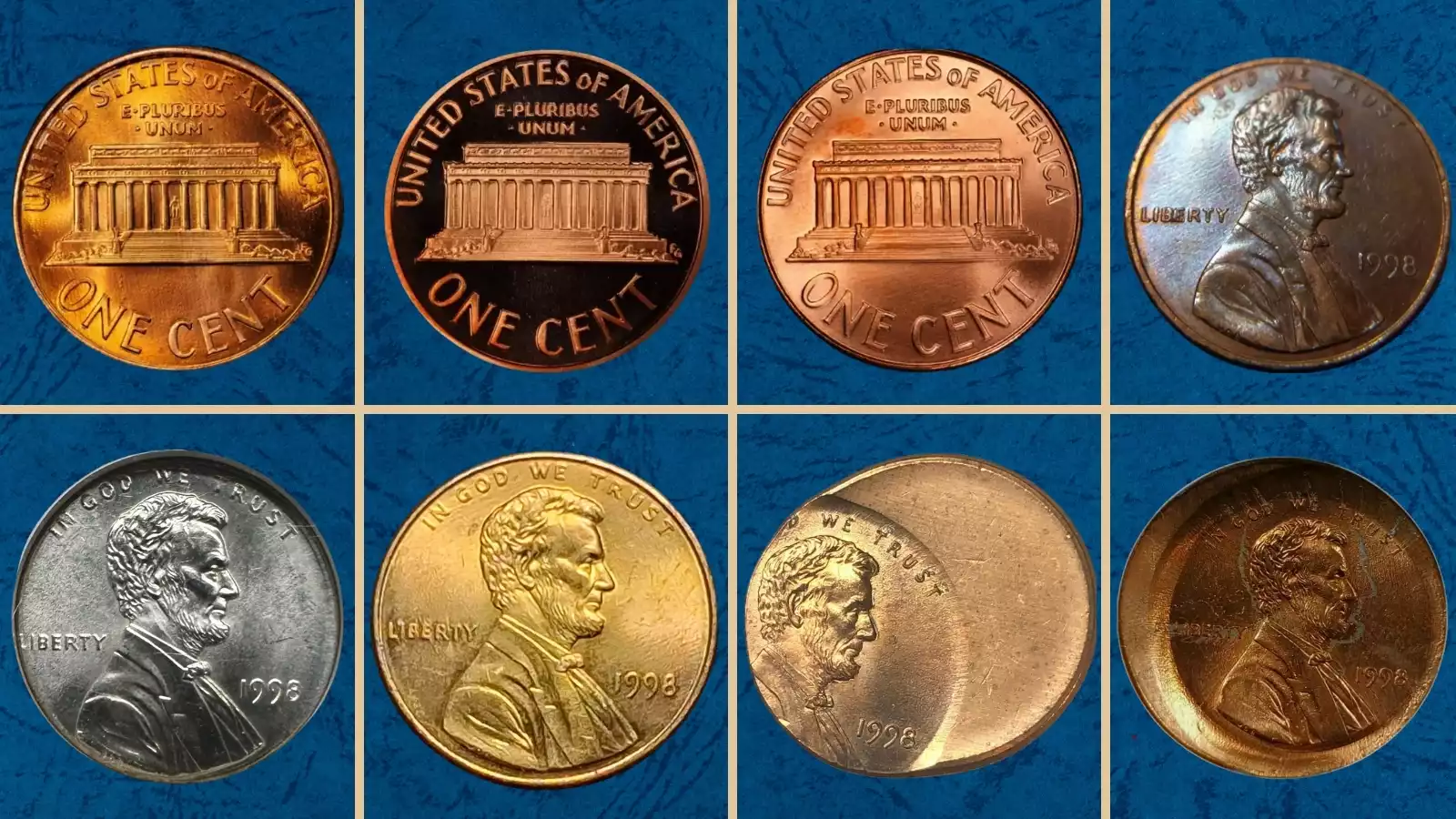
The 1998 Wide AM is a transitional die error caused when a proof reverse die (designated RDV-006) was accidentally introduced into business-strike production at the Philadelphia Mint. Proof reverse dies intentionally space the "A" and "M" in "AMERICA" further apart for visual clarity on mirror-field proof coins. When these dies reached the production presses, the result was a small but detectable difference in letter spacing that separates this variety from every other 1998-P cent.
Visually, the diagnostic is straightforward with magnification: at the feet of the letters "A" and "M" in "AMERICA" on the reverse, there is a clear, daylight-visible gap. On standard Close AM coins, those same letter feet nearly touch. Secondary confirmation comes from the "FG" initials to the right of the Memorial building — on Wide AM coins, these initials sit measurably closer to the building's base.
Collector demand for this variety is driven by its status as the second-scarcest Wide AM in the 1992–2000 transitional series, behind only the 1998-S Close AM. Over 100,000 examples are estimated to exist, but the vast majority have never been identified or submitted for grading. High-grade Red specimens are the true condition rarities, with MS67 RD examples regularly selling for $400–$725 and the auction record of $940 set at Heritage Auctions on June 4, 2014.
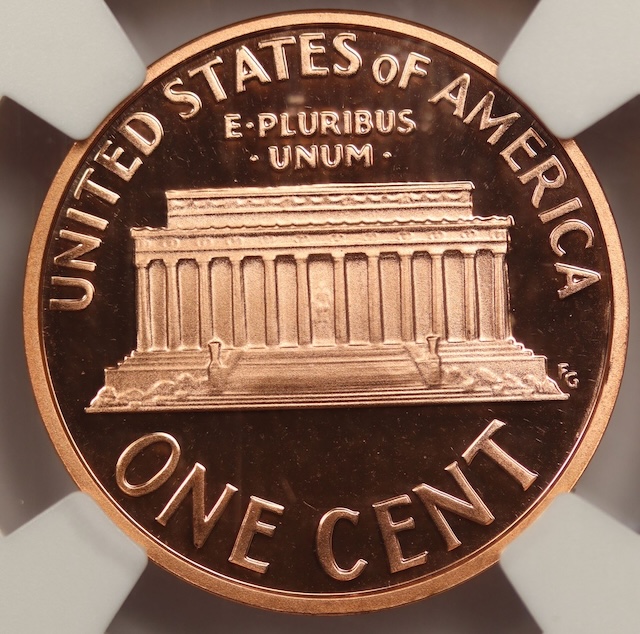
1998-S Close AM Proof (FS-901)
The 1998-S Close AM is the mirror image of the Wide AM error — and far rarer. San Francisco Mint proof coins are supposed to use the Wide AM reverse die (RDV-006), which spaces the "A" and "M" in "AMERICA" apart. But on a small number of 1998-S proofs, a business-strike reverse die (RDV-007) was accidentally paired with the proof obverse die, producing proof coins with abnormally close AM spacing. Fewer than 100 total examples are believed to exist.
Identification requires careful examination: the "A" and "M" in "AMERICA" on the reverse should nearly touch (Close AM), which is the opposite of what a genuine San Francisco proof should show. Additional confirmation comes from the "FG" initials, which appear further from the Memorial building base on Close AM coins, and the "G" in "FG" will show a non-flared serif style typical of the business-strike die. All suspected examples should be submitted to PCGS or NGC because counterfeits do circulate.
PCGS had graded only 9 examples at PR70 DCAM as of late 2024, making perfect specimens extremely scarce. A PR70 DCAM achieved $5,160 at Heritage Auctions in February 2024, and a separate example sold for $4,500 on eBay in July 2015. The PR68 DCAM level typically realizes $1,000–$1,500, and even PR67 DCAM examples command around $180–$200.
1998 Doubled Die (DDO / DDR)
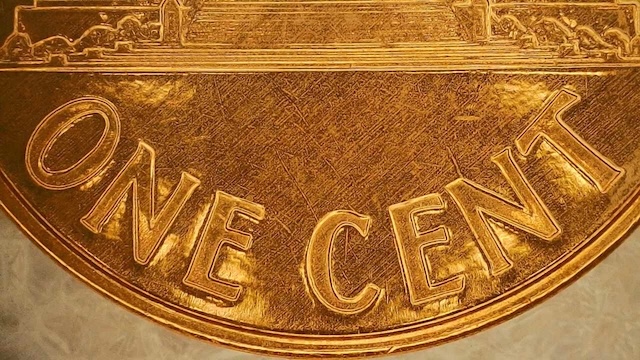
Doubled die errors occur during the die-manufacturing process: the working hub impresses the design into the die at a slightly different angle on a second or subsequent squeeze, creating a doubling of some design elements. On 1998 Lincoln cents, doubling appears most commonly on the obverse (DDO), affecting Lincoln's eye, the bowtie, date numerals, or the lettering in "LIBERTY" and "IN GOD WE TRUST." A separate documented Doubled Die Reverse (DDR) is known for Denver coins, showing doubling on "ONE CENT" and "E PLURIBUS UNUM."
Most 1998 doubled die varieties are minor — the doubling is a slight spreading or offset that requires a quality 10× loupe and proper raking light to see clearly. Look for a shadow or shelf on the inner rim of letters, doubled hairlines on Lincoln's portrait, or a second ghosted image of the date. Strong, clearly visible doubling commands the highest premiums; subtle machine doubling (which is not a true DDO) adds no numismatic value.
Minor DDO/DDR varieties typically sell for $20 to $50 depending on the strength and clarity of the doubling. The 1998-D DDR featuring visible doubling on reverse inscriptions can bring $20 to $75 for well-defined specimens. Only dramatic examples with clearly visible naked-eye doubling attract serious premium bids from error specialists.
1998 Off-Center Strike
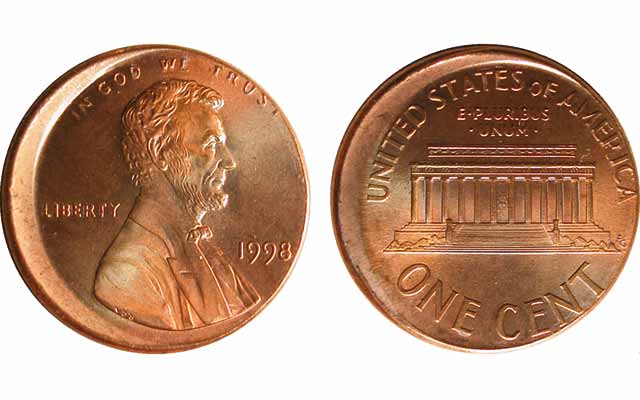
Off-center strikes occur when a planchet is misaligned under the die at the moment of striking, or when one die pair is slightly off-center relative to the other. The result is a coin where part of the design is present and part of the planchet shows as a plain copper-zinc blank crescent. The amount of misalignment is measured as a percentage of the coin's diameter, and this percentage is the primary value driver.
Minor off-center errors of 3% to 10% are relatively common in the Lincoln cent series and can be found through careful roll searching. At this range, values are modest — around $5 to $15. The most collectible and valuable off-center 1998 cents are those showing 45% to 60% misalignment where the full date is still visible within the struck portion. With the date present, collectors know exactly what they have, and these specimens regularly sell for $50 to $100 or more at auction.
Key collector criteria: the full date (1998) must still appear on the struck area to command top premiums. A heavily off-center coin missing the date is worth significantly less because it loses its year identification. Condition of the struck area also matters — an uncirculated off-center example in bright red copper is worth considerably more than a worn circulated piece.
1998 Wrong Planchet (Dime Planchet)
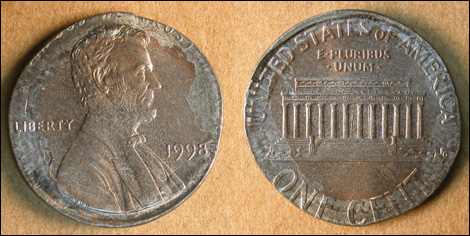
A wrong planchet error occurs when a blank (planchet) intended for a different coin denomination slips into the cent press. The most documented version for 1998 cents involves copper-nickel clad dime planchets — the same blanks normally used for Roosevelt dimes. The cent dies strike the dime-sized blank, producing a coin with Lincoln's portrait and the Memorial reverse imprinted on what is visibly a smaller, silver-colored disc.
Detection is straightforward and does not require magnification. A normal 1998 cent weighs 2.5 grams and measures 19.05mm in diameter. A 1998 cent struck on a dime planchet weighs only approximately 2.27 grams and measures roughly 17.91mm — both smaller and lighter. The copper-nickel clad composition of the dime planchet gives the coin a silver-white appearance immediately distinguishable from normal copper-plated zinc. Parts of the design may be weakly struck or incomplete at the edges where the smaller planchet couldn't fill the full die area.
These errors command significant premiums due to their dramatic visual impact and relative rarity. Circulated examples typically sell for $300 to $500, while uncirculated specimens have achieved $750 to $1,500 or more at auction. PCGS and NGC authentication is strongly recommended before purchase or sale, as the unusual appearance of these coins sometimes leads to misidentification of damaged coins.
1998 BIE Die Crack
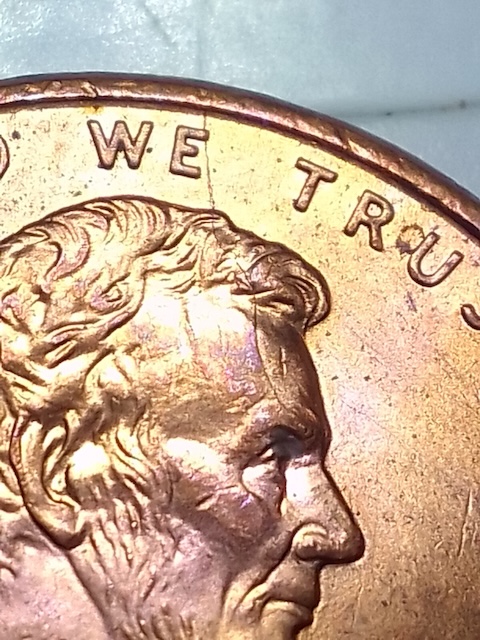
The BIE die crack is a type of die break specific to Lincoln Memorial cents, occurring when a production die develops a crack or chip between the letters "B" and "E" in the word "LIBERTY" on the obverse. The resulting raised metal — called a die break or cud — takes the form of a vertical line resembling the letter "I," making the inscription appear to read "LIBIERTY" rather than "LIBERTY." This error is documented across many Lincoln cent years, including 1998.
Unlike some die breaks that are barely visible, a well-formed BIE crack is detectable with the naked eye or a low-power loupe of 5× or less. The raised "I" is a positive (raised) feature, not an incuse mark — meaning it protrudes above the coin surface rather than being pressed into it. A die crack, by definition, produces a raised line on the coin because metal flows into the crack at the die's surface. The stronger and more clearly defined the "I" shape, the more desirable the coin.
Modern Lincoln Memorial BIE cents, including those from 1998, do not command the large premiums seen on earlier Wheat cent BIE varieties from the 1940s and 1950s. Typical examples sell for $10 to $15. However, coins with a bold, well-formed "I" that is easily visible under normal conditions can reach $20 to $25. Collectors of Lincoln error coins often seek one representative BIE for their type sets at minimal cost.
Found one of these errors on your 1998 penny? Run it through the calculator to get a specific value estimate based on your coin's mint, condition, and variety.
Get My Coin's Value →1998 Penny Mintage & Survival Data
| Mint | Mint Mark | Mintage | Estimated Survival | Survival Rate | Notes |
|---|---|---|---|---|---|
| Philadelphia | None | 5,032,155,000 | ~2.1 billion | ~41.7% | Close AM standard; Wide AM variety subset |
| Denver | D | 5,225,353,500 | ~2.1 billion | ~40.2% | Close AM only; DDR variety documented |
| San Francisco | S | 2,086,507 | ~1.94 million | ~93.1% | Proof only; Wide AM standard; Close AM rare variety |
| Total | — | 10,259,595,007 | — | — | Over 10.2 billion combined |
📋 Composition Specifications
Metal: Copper-plated zinc (99.2% Zn core, 0.8% Cu plating) | Weight: 2.5 grams | Diameter: 19.05mm | Thickness: 1.52mm
Obverse designer: Victor David Brenner (Lincoln portrait) | Reverse designer: Frank Gasparro (Lincoln Memorial)
Edge: Plain | Series: Lincoln Memorial cent (1959–2008)
Sources: PCGS CoinFacts, NGC Coin Explorer, U.S. Mint Annual Report · 2026 edition
How to Grade Your 1998 Lincoln Cent
For copper-plated zinc cents, grading involves two separate evaluations: wear level (G through AU) and color preservation (Brown, Red-Brown, or Red). Both affect value, but color can triple the price at the same numeric grade.
Worn
Heavy circulation wear. Lincoln's cheek, jaw, and hair are flat and smooth. The Memorial's columns are fused together. Date and inscriptions still readable. Original luster entirely gone — coin is Brown (BN).
Common: face value · Wide AM: $10–$15
Circulated
Moderate to light wear. Most design details visible but high points show wear. Hair strands above Lincoln's ear partially visible. Memorial steps show some detail. May retain traces of luster in recesses. Coin is Brown to Red-Brown.
Common: $0.01–$0.25 · Wide AM: $15–$30
Uncirculated
No circulation wear present. Contact marks from bag handling visible but design elements sharp. Luster present but may be broken. Color ranges from Brown to Red. RD designation requires 85%+ original copper-red color.
Common RD: $2–$10 · Wide AM RD: $20–$85
Gem
Exceptional surfaces with very few contact marks. Strong original mint luster. Sharp strike throughout. RD (Red) designation strongly preferred — commanding a 300%+ premium over Brown at the same numeric grade. MS68 RD is the condition rarity for this date.
Common RD: $22–$190+ · Wide AM RD: $185–$940+
💡 Pro Tip: Color Is Everything on 1998 Pennies
The copper-plated zinc composition of post-1982 Lincoln cents oxidizes quickly in circulation and even in improper storage. For the 1998 Wide AM at MS65, an RD coin is worth roughly $85 while the same variety in Brown (BN) fetches only about $27 — a 300%+ premium solely for color retention. Store uncirculated examples in inert PVC-free flips or airtite holders immediately. Never clean, dip, or polish — cleaning permanently creates hairlines visible under magnification and destroys value.
🔬 CoinHix can cross-check your coin's appearance against certified examples in its grading database, helping you match your 1998 penny to the correct condition tier before submitting to PCGS or NGC. — a coin identifier and value app
Where to Sell Your Valuable 1998 Penny
The right venue depends on how rare your coin is. A Wide AM or Close AM proof deserves a specialty auction; a common uncirculated cent is fine for eBay or a local shop.
🏛️ Heritage Auctions
Best for: Certified Wide AM (MS65+ RD), Close AM proofs, and any coin valued over $200.
Heritage Auctions is the world's largest numismatic auction house and the proven marketplace for high-value 1998 cent varieties. The $940 Wide AM record and major Close AM sales have all passed through specialty coin auctions like Heritage. Expect 15–20% buyer's premium; seller fees vary. Pre-submission consultation is available.
💻 eBay
Best for: Certified common-date examples, circulated Wide AMs, and lower-grade errors.
The recently sold prices for 1998 Lincoln penny listings on eBay show steady demand for PCGS and NGC slabbed examples across all grades. Wide AM specimens in circulated condition regularly sell for $15–$35 without grading. Use "Sold Listings" to price your coin accurately before listing. Fixed-price listings for common examples outperform auctions.
🏪 Local Coin Shop
Best for: Quick sales of lower-value coins; appraisals before deciding where to sell.
A local dealer offers immediate cash with no shipping risk. Expect 40–60% of retail value — dealers must factor in their margin. Bring any raw (ungraded) Wide AM suspects here first for a professional opinion on whether the coin warrants PCGS/NGC submission. Many dealers will identify varieties for free if you're considering consignment.
💬 Reddit r/Coins
Best for: Getting a second opinion on variety identification; connecting with collector buyers.
The r/coins and r/CRH (coin roll hunting) communities on Reddit are active with Lincoln cent variety collectors who can help confirm Wide AM identification before you spend money on grading. Not a formal marketplace — use r/CoinSales for actual transactions. Community members often pay fair collector prices for confirmed varieties.
🏅 Get It Graded First — for Any Wide AM or Close AM
A raw (ungraded) 1998 Wide AM sells for $15–$50 in circulated condition. The same coin in a PCGS or NGC slab at MS65 RD can bring $85+, and at MS67 RD it has realized nearly $1,000. PCGS and NGC submission fees of $20–$60 are quickly offset by premium increases. Authentication also protects buyers and dramatically increases buyer confidence — certified coins sell faster and at higher prices than raw examples, especially on eBay.